Non-Transactional Sincerity
I was once accused at work of something I didn't do. Afterwards my mind spent a lot of effort on questions:
- What did I do wrong to deserve this?
- Did I mistake an ordinary mistake in communication for an accusation?
- Or did I communicate badly, and cause it myself?
- Is it the company's culture?
- Is it karma from a past life?
- Is it a test from God, or the gods?
- Perhaps the person has a childhood trauma that makes them behave this way?
Each question sounded reasonable. Some were even kind. But they all did the same job: they tried to settle an account, working out who owed what, and whether I was guilty, unlucky, tested, or the one who ought to forgive.
Eventually I saw that the answers didn't matter. The question worth asking was a different one: do I still treat this person with the same sincerity as before, or am I keeping a tab of what they did, or seem to have done?
Nobody can finish the audit
There is an old French saying:
Tout comprendre,
To understand all
c'est tout pardonner.
is to forgive all.
French proverb
The trouble is the word all. To understand all, I would have to know the other person's history and wounds, the politics of the workplace, the weak points of everyone involved including me, and, if they exist, karma and the stars. Nobody has that.
Grant the most generous case, where everything is physical and nothing is hidden. In 1814 Laplace imagined a mind that knew the position and momentum of every particle in the universe and could therefore work out its entire past and future (Essai philosophique sur les probabilités). Even that mind is out of reach. An exact position takes unlimited precision to measure, and a universe with finite energy cannot pay for unlimited precision. A mind that held the state of everything would also have to be as large as the universe, and it could not hold itself. Knowing all is ruled out by physics, before any question of faith.

Theology arrives at the same limit from the other side. Thomas Aquinas argues that no created mind, not even one that sees God, can know everything that God does or can do (Summa Theologiae I, q.12, a.8).
So the audit can't be finished. Partial understanding is also the risky kind, because it tends to support whichever verdict I had already picked. That can produce a fallacious view of the situation, and the view can harden in a vicious cycle of ever-deepening self-fulfilling prophecies. The questions above were this audit, kind ones included.
Where the heart rests
If the audit can't be finished, the question is what to do instead. Several traditions point at the same thing in different words, something I think the reader already has deep inside: stop leaning on your own understanding, and put your heart somewhere the account can't reach. The Hebrew Bible says it like this:
בְּטַ֣ח אֶל־יְ֭הוָה
Trust in the LORD
בְּכָל־לִבֶּ֑ךָ
with all your heart,
וְאֶל־בִּֽ֝ינָתְךָ֗
and do not lean
אַל־תִּשָּׁעֵֽן׃
on your own understanding.
Proverbs 3:5, Westminster Leningrad Codex
And in the Gospels, the heart is given a name:
ὁ δὲ ἔφη αὐτῷ·
He said to him:
Ἀγαπήσεις κύριον τὸν θεόν σου
"You shall love the Lord your God
ἐν ὅλῃ τῇ καρδίᾳ σου
with all your heart
καὶ ἐν ὅλῃ τῇ ψυχῇ σου
and with all your soul
καὶ ἐν ὅλῃ τῇ διανοίᾳ σου·
and with all your mind."
Matthew 22:37, SBL Greek New Testament (CC BY 4.0)
"Your heart in God" thus means to love; the first letter of John goes as far as saying that God is love (1 John 4:8).
I cite these as illuminating hints, not as proof. They point at something everyone has already experienced from the inside, most purely when they were a baby, before any account was kept: trusting, responding and giving without calculation. No scripture is needed to confirm it, and that is why every other lens is optional:
Seen materially,
a chain of biochemical reactions led up to the accusation.
Seen spiritually,
it could be a test from Satan or from God.
Seen through the dharma,
my past-life karma may have come to ripen.
Seen psychologically,
the people involved may have had abusive upbringings.
Any of these may be true, and none of them changes what is asked of me: to act out of love and sincerity.
I don't need to settle any metaphysics to use this. I read "God" here as one tradition's name for what a person holds highest, and a reader from another tradition, or none, can put their own word there. In fact, the practical implications of this article don't even care about your theological stance (or the lack thereof), because that's the point: you don't need to fully understand in order to act fully in a self-verifiable way. It's like seeing without knowing how light works, where it lands in our eyes, how it gets converted into biochemical and electrical neural signals, and how it ends at the visual cortex. This fundamental, practical way of life extends to the whole theological spectrum, from atheism to pantheism.
One thread in three old phrases
Three phrases have stayed with me for years without my seeing what they had in common. The common thing is that none of them is a transaction.
Feeling. The Great Learning says that sincerity means not deceiving yourself, and gives an image for it:
所謂誠其意者,
What is meant by making one's intentions sincere is:
毋自欺也。
do not deceive yourself.
如惡惡臭,
Be like hating a bad smell,
如好好色。
be like loving a beautiful colour.
禮記·大學 (Great Learning)
You don't weigh the benefits of loving a beautiful colour, or the drawbacks of hating a bad smell. The response comes first and needs no justification.

Giving. In the Diamond Sutra, the Buddha tells Subhūti how a bodhisattva should give:
復次,須菩提,
अपि तु खलु पुनः सुभूते
Furthermore, Subhūti,
菩薩於法,應無所住,行於布施。
न बोधिसत्त्वेन वस्तुप्रतिष्ठितेन दानं दातव्यम्, न क्वचित्प्रतिष्ठितेन दानं दातव्यम्।
a bodhisattva should give without dwelling on anything.
所謂不住色布施,
न रूपप्रतिष्ठितेन दानं दातव्यम्।
That is: not dwelling on form when giving,
不住聲、香、味、觸、法布施。
न शब्दगन्धरसस्प्रष्टव्यधर्मेषु प्रतिष्ठितेन दानं दातव्यम्।
nor on sound, smell, taste, touch, or mental objects.
須菩提,菩薩應如是布施,
एवं हि सुभूते बोधिसत्त्वेन महासत्त्वेन दानं दातव्यं
Subhūti, a bodhisattva should give in just this way,
不住於相。
यथा न निमित्तसंज्ञायामपि प्रतितिष्ठेत्।
not dwelling on marks.
金剛般若波羅蜜經 (Diamond Sutra), Kumārajīva's Chinese translation, beside the Sanskrit Vajracchedikā Prajñāpāramitā (ed. P. L. Vaidya, 1961). Giving without dwelling on marks (不住相佈施) is the usual shorthand.
The two are close, with one difference I find telling. The Chinese ends on "mark" or "appearance" (相). The Sanskrit ends on nimitta-saṃjñā, the notion of a sign. So what the bodhisattva must not rest on is not only the giver, the receiver and the gift, the three parties to an exchange, but the idea that there are such things. Not dwelling on them means not keeping the books.
Trusting. Last, the saying attributed to Jesus after Thomas demanded to see before believing:
λέγει αὐτῷ ὁ Ἰησοῦς·
Jesus says to him:
Ὅτι ἑώρακάς με πεπίστευκας;
"Because you have seen me, have you believed?
μακάριοι οἱ μὴ ἰδόντες
Blessed are those who have not seen
καὶ πιστεύσαντες.
and yet have believed."
John 20:29, SBL Greek New Testament (CC BY 4.0).
Waiting for proof turns trust into a purchase: show me the goods, and then I will pay. Believing first treats the relationship as something other than a contract.
The difference between giving and trading shows in how Mencius describes the sage-king Shun:
舜明於庶物,察於人倫;
Shun understood the many things and examined human relations;
由仁義行,
he acted from benevolence and righteousness,
非行仁義也。
he did not practise benevolence and righteousness.
孟子·離婁下 (Mencius 4B19)
To practise benevolence is to run the numbers: look at what this person did before, what people like them tend to do, which response has worked in the past, and then produce the behaviour that fits. It can look identical to love, and it can be performed for an effect, such as to look generous, to win someone over, or to feel like a good person. To act from love is for the behaviour to flow from the source, whatever the data says.
I'm not saying that calculation is unimportant. But the best algorithm is the one that can adapt on the spot, and I think only true sincerity can do that. It feels almost like a natural response. That is what "loving a beautiful colour" (如好好色) was pointing at, and it is why the question I keep coming back to is not "am I behaving well?" but "where am I acting from?"
So here is my claim. Feeling, giving and trusting are one faculty, pointed in three directions. It is the ability to act without expecting to be paid in evidence, reward or recognition, or out of fear of divine punishment or karmic consequences. And it is not a default setting. Like taste or hearing, it is dull until it is trained.
Not the same as acting on impulse
"Acting without reasons" can mean two very different things. A person can act without reasons because they never examined themselves. A person can also act without reasons because they went through the reasons and came out the other side. From outside, the two look the same.
Classical writers kept pointing at this difference. Confucius said that he set his heart on learning at fifteen, and only at seventy could he follow what his heart desired without overstepping the line (Analects 2.4).
Following the heart is the endpoint of fifty-five years of work, not the starting point. The butcher in the Zhuangzi says the same about his craft:
始臣之解牛之時,
When I first began cutting oxen,
所見无非牛者。
all I saw was ox.
三年之後,
After three years,
未嘗見全牛也。
I no longer saw the whole ox.
方今之時,
Now,
臣以神遇而不以目視,
I meet it with spirit and do not look with my eyes;
官知止而神欲行。
my senses stop, and my spirit moves as it wishes.
莊子·養生主 (Zhuangzi, "Nourishing the Lord of Life")

What separates trained ease from impulse is the self-awareness behind the act.
The auto-labeller
Here is the picture that helped me most. Imagine a CCTV system that tags every person who comes into view automatically with a label and a bounding box: colleague, threat, friendly, accuser. You didn't write the labels, and the system runs on its own. After the accusation, it had a new label for that person, and everything I did afterwards started from it.
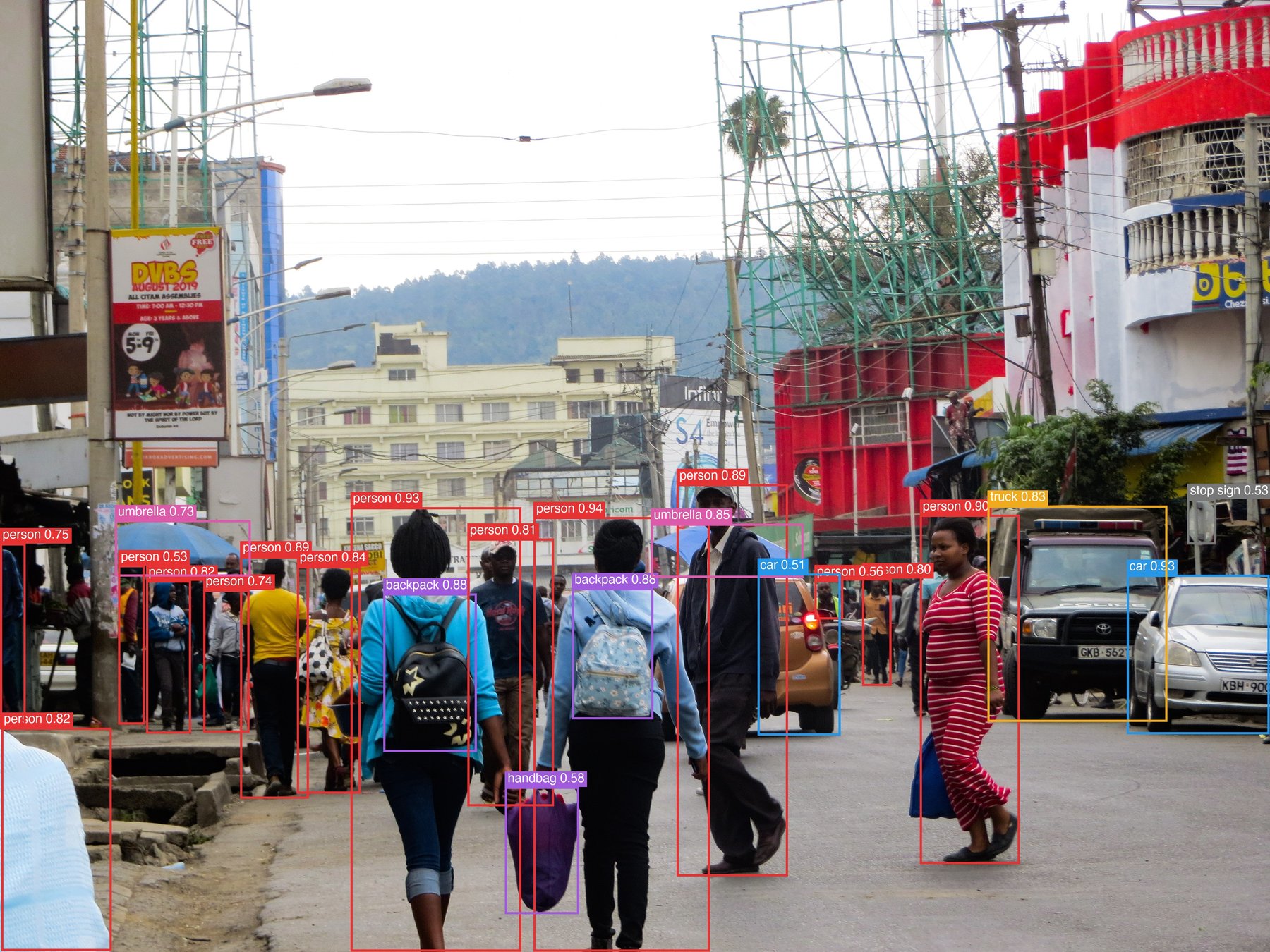
I think this is what the Diamond Sutra means by "marks" or "appearances" (相). Dwelling on marks (住相) is trusting the labels as if they were the person.
Seeing this is sudden. One moment you take the labels for the world, and the next you notice that a labelling system is running. Changing the system is slow. The labels came from habits that were wired over years, and they don't disappear on the day you see them. The Chan tradition has an old name for the combination, sudden awakening followed by gradual cultivation (頓悟漸修), and Zongmi (宗密) argued that the two are not rivals:
頓漸非唯不相乖,
Sudden and gradual not only do not conflict;
反而乃互相資也。
they in fact help each other.
宗密, 禪源諸詮集都序 (Chan Prolegomenon)
In my case, the sudden part was dropping the questions. The gradual part was what came after. The alarm system kept lighting up with warnings about the "incidents," and it took real mental effort to hold my course anyway. I acted as if it had never happened, and by that I don't mean pretending the alarm wasn't ringing. I noticed it, didn't obey it, and didn't add to the tab. The effort was where the training happened.
Because I work with software, there is a way to say this that makes sense to me. The labels are the output of a model whose weights I never chose. If I take a materialistic view here, these weights are but neurological pathways that were inherited from my biological parents and shaped by my past experiences. My objective, to treat people with sincerity, comes from the weights too. It was instilled by years of learning and reading the sages' words and contemplating them deeply; I was not born knowing it (生而知之). Once instilled, it can be held fixed as the target that the other weights are adjusted against. This article is meant as the same kind of input, in the hope of kick-starting the same spark in you. Turning the question back on myself is like backpropagation: instead of blaming the data, I propagate the error back through my own weights and adjust them. Treating people transactionally is like optimizing a proxy, gratitude or reputation, instead of the thing the proxy stands for.
Keep the source clear, not the stream
The famous exchange in the Platform Sutra gives this effort a picture. Shenxiu wrote first:
身是菩提樹,
The body is the bodhi tree,
心如明鏡臺。
the mind is like a bright mirror on its stand.
時時勤拂拭,
Keep wiping it diligently,
勿使惹塵埃。
and let no dust settle.
神秀 (Shenxiu), 壇經 (Platform Sutra), Dunhuang manuscript
Huineng answered:
菩提本無樹,
Bodhi originally has no tree,
明鏡亦無臺。
the bright mirror has no stand.
佛性常清淨,
Buddha-nature is always pure,
何處有塵埃。
so where could dust be?
慧能 (Huineng), 壇經 (Platform Sutra), Dunhuang manuscript
Think of the mirror as a stream instead. The debris scattered along the stream's path is Shenxiu's dust, and clearing it by hand is his wiping. Huineng's "Buddha-nature is always pure" (佛性常清淨) is the spring: the source is already clear, so running water has nowhere for dust to settle. He doesn't deny that debris appears. He denies that clearing it is the work, and points back to the source, which only needs to keep running.points back to the source, which only needs to keep running.
So the biological alarms need no suppressing and no fighting; the effort goes elsewhere. Focus on being sincere and compassionate, on keeping the source of the spring running clean and steady, rather than worrying about, or actively clearing, the debris.

A spring that is running
Ichetucknee Springs, Florida. State of Florida, photo by T. Scott, public domain, via Wikimedia Commons.


A bed where the water has stopped
Near Loggerheads, North Wales. Photo: Rept0n1x, CC BY-SA 3.0, via Wikimedia Commons.

The verse is practical advice as well as metaphysics. Huineng awakened on hearing "give rise to the mind without dwelling anywhere" (應無所住而生其心) from the Diamond Sutra, the same line behind "giving without dwelling on marks" above, and that line is an instruction for how to live and not just a statement about reality.
What I found, eventually, is that the blocker was my own mind. I'm sure the event left a dent in both our brains (the amygdala tagging it as a threat, the hippocampus filing its context), but my own mental blocker was the one I could resolve. After the accusation, things got worse before they got better: my perception of John (a pseudonym), and the relationship along with it, soured. The system's label for John was loud: the accuser, the wronger of the innocent. I fought that noise with everything I had, against the biological straps holding me back, and started a conversation as if the accusation had never happened, and John talked to me as if nothing had happened either. The barrier, social and mental, collapsed under its own weight, and the prejudice that the system had attached to John faded. The stream cleanses itself as long as it keeps flowing steadily.
Whether the barrier was purely mental, purely social or both, and whether it was only my perception or reality, doesn't matter. What mattered was the relief of not needing to suppress my sincerity because of an unpleasant event. That would be like putting out the fireplace because of a snowstorm: utterly absurd.
That relief did not depend on John's reply. Had John stayed cold, I would still have felt it, because it came from knowing I had not let external circumstances kill my sincerity, and from being at ease with myself. John's warmth was a welcome extra, not the payment.
Meanwhile my body does what it does. The sympathetic-adrenal-medullary system injects adrenaline into the bloodstream, the HPA axis (hypothalamic-pituitary-adrenal) follows with cortisol, and I tense up. Yet deep down, whether that place is physical, metaphysical, both or something else, the relief is felt.
Where to start
That leaves the practical question. If I haven't yet reached "like hating a bad smell, like loving a beautiful colour," how do I begin? There are two steps.
1. Have a goal. The old phrase for it is "setting one's aim" (立志). Cheng Yi calls it the foundation and says what it takes:
所謂立志者,
What is meant by setting one's aim is:
至誠一心,
to be wholly sincere in one mind,
以道自任,
to take the Way as one's own charge,
以聖人之訓為可必信。
and to hold the sages' teaching as certainly to be trusted.
程頤 (Cheng Yi), 近思錄 (Reflections on Things at Hand), ch. 8
Wang Yangming opens his instructions to his students with the same point: set your aim on being a sage, and you become one. Huineng told the Fifth Patriarch he had come for nothing else.
The goal, framed for the beginner, is the one the Doctrine of the Mean traces in the last section: to realise your own nature fully, then that of others and of all things, and so to assist the nurturing work of heaven and earth. It is framed for the beginner because for the sage there is no boundary between self, people, things and heaven, so nothing is left to aim at from outside.
I ask you to take this goal on trust, as Cheng Yi does when he says to hold the sages' teaching as certainly to be trusted (以聖人之訓為可必信). Don't stall on "what is even the right question to ask?" the way philosophers do. That is the endless audit again, and the sages have already walked this road.
2. Don't change it. Whatever the circumstances, keep the goal. Mencius gives the stance:
夭壽不貳,
Do not waver whether life is short or long;
修身以俟之,
cultivate yourself and await what comes.
所以立命也。
This is how one establishes one's destiny.
孟子·盡心上 (Mencius 7A1). Often written 夭壽不二 in modern shorthand; 貳 means to be of two minds. Some editions write 殀 for 夭.
Lifespan is the ultimate payoff, and refusing to let it change your course is refusing the ultimate transaction.
But an aim chosen on purpose looks like the calculation I warned against. At the start, it is. It feels deliberate and unnatural, and the Doctrine of the Mean gives this stage its own name:
誠者,天之道也;
Sincerity is the way of heaven;
誠之者,人之道也。
striving to be sincere is the way of humans.
誠者,不勉而中,不思而得,從容中道,聖人也;
The sincere hit the mark without effort and attain without thinking, moving easily along the way: these are the sages.
誠之者,擇善而固執之者也。
Those who strive to be sincere choose the good and hold fast to it.
禮記·中庸 (Doctrine of the Mean), ch. 20
So the goal, the deliberate effort and the awkwardness belong to the human way. The destination is sincerity with nothing transactional left in it. Wang Yangming, commenting on the Mencius line above, describes the two stages:
「知天」,如「知州」、「知縣」之「知」,
"Knowing heaven" is like the "knowing" in "know-prefecture" and "know-county",
是自己分上事,己與天為一。
it is one's own business, and one is one with heaven.
……
...
至於夭壽不貳其心,
As for not wavering in mind over short or long life,
乃是教學者一心為善,
it teaches learners to set their whole mind on doing good,
不可以窮通夭壽之故,便把為善的心變動了,
and not to let hardship, success or the length of life shake that mind;
只去修身以俟命。
only to cultivate oneself and await what comes.
王陽明, 傳習錄·上 (Wang Yangming, Instructions for Practical Living, upper volume)
Yangming gives the learner's task in the last lines: set the mind on doing good, and let neither hardship nor fortune shake it. That echoes "choose the good and hold fast" (擇善而固執之) above. The word "know" (知) in a magistrate's title means to be in charge, so to "know heaven" is to treat heaven's work, nurturing what is in front of you, as your own. That is the ideal, where the goal has dissolved into nature and the question of payment no longer arises.
What is the aim? The Great Learning opens with it:
大學之道,
The way of the Great Learning lies
在明明德,
in illuminating one's luminous virtue,
在親民,
in being close to the people,
在止於至善。
and in coming to rest in the highest good.
禮記·大學 (Great Learning)
These three phrases are usually called the "three guidelines," but I think they read better as three aspects of one goal. Illuminating one's luminous virtue (明明德) is the light within, a mind clear enough to see its own motives. Being close to the people (親民) is that light shining outward, so that the people near you are actually better off. Coming to rest in the highest good (止於至善) is resting in the highest good without conditions, which is what not wavering whether life is short or long (夭壽不貳) protects. The aim isn't first to be clear and later to be kind.
Notice that "closeness to people" radiates from the centre, starting with the people nearest you. I don't think of that as something to engineer. If the light is real, the radiation follows. The nearest people are also the hardest test, because the ledger runs most actively there.
The Gospels state the same aim in two sentences, and they are the barest statement of it I know. When asked which commandment is greatest, Jesus gives the one quoted earlier, to love God with all your heart, soul and mind, and then adds a second:
δευτέρα δὲ ὁμοία αὐτῇ·
"And a second is like it:
Ἀγαπήσεις τὸν πλησίον σου ὡς σεαυτόν.
You shall love your neighbour as yourself.
ἐν ταύταις ταῖς δυσὶν ἐντολαῖς
On these two commandments
ὅλος ὁ νόμος κρέμαται καὶ οἱ προφῆται.
hang the whole law and the prophets."
Matthew 22:39–40, SBL Greek New Testament (CC BY 4.0)
Look at what is missing. There is no "if" and no "because". It does not say to love your neighbour if they deserve it, if they love you back, or so that you will be rewarded, and the same goes for loving God. "As yourself" sets a measure, not a price. The only warrant given is the speaker. That is the same move as Cheng Yi's: the aim is received on trust, not derived from anything. A reader who does not take Jesus as an authority can still see the shape, which is an aim with nothing transactional in it.
That does not make the other commandments unimportant. The verse says the whole law and the prophets hang on these two, like a coat on a peg, and Paul draws the same conclusion: love does no harm to a neighbour, so love is the fulfilment of the law (Romans 13:10). The rest are not a second list to be worked through alongside the first. They are satisfied as a consequence of keeping these two.
The ledger's favourite move is to narrow the aim until it excuses me. In Luke's version of the scene, the man who asked wanted to justify himself and so asked, "And who is my neighbour?" (Luke 10:29). That is the audit again, applied to the question of who is owed love. In my story the answer was uncomfortably plain: John was the person next to me, and the commandment carries no exception for people who have accused me.
This is my reading, not a claim about what the passage meant to its first hearers. Loving God without condition lines up with coming to rest in the highest good (止於至善), and loving the neighbour without condition lines up with being close to the people (親民). Two commandments, like three aspects, are one aim seen from different sides.
The same structure, practice first and the rest as consequence, helps me with a neo-Confucian slogan: "preserve heaven's principle, extinguish human desires" (存天理,滅人欲). I used to read it as two practices, one of cultivating the good and one of fighting the bad. Now I read it as one practice and its consequence. Preserving heaven's principle (存天理) is the practice. Extinguishing the self-serving desires (滅人欲) is what follows when the practice is real. Mencius states the mechanism:
先立乎其大者,
First establish what is greater,
則其小者弗能奪也。
and the lesser cannot take it away.
孟子·告子上 (Mencius 6A15)
This is the picture of the spring and the debris again. Extinguishing desires by hand is Shenxiu's wiping, and keeping the source running is the practice. If the practice is real, the desires lose their hold without being hunted one by one. The reverse also holds: a person who only fights desires has made the fight the aim, and the ledger is back, now tracking how well they are resisting.
Since acting on impulse and acting from clarity feel identical from inside, I check outward, asking whether the people near me are actually better off and whether my aim holds when no one notices or nothing is repaid, and I would attach a few cautions even to that check.
Sincerity, not Naïveté
γίνεσθε οὖν φρόνιμοι ὡς οἱ ὄφεις
So be shrewd as serpents
καὶ ἀκέραιοι ὡς αἱ περιστεραί.
and innocent as doves.
Matthew 10:16, SBL Greek New Testament (CC BY 4.0)
It is one case. I am describing something that happened to me and how I responded to it. I don't claim that sincerity always dissolves conflict, or that it should replace other responses.
It doesn't mean never acting. Acting without a goal is blind, and the goal is simple: what can I do to nudge this person further towards their maximum self-actualization? The same question applies to everything, not only to people, and the Doctrine of the Mean traces the chain outward from sincerity:
唯天下至誠,為能盡其性;
Only the utmost sincere person under heaven can fully realise their own nature.
能盡其性,則能盡人之性;
Able to fully realise their own nature, they can help others fully realise theirs.
能盡人之性,則能盡物之性;
Able to help others realise theirs, they can help all things realise theirs.
能盡物之性,則可以贊天地之化育。
Able to help all things realise theirs, they can assist the transforming and nourishing work of heaven and earth.
禮記·中庸 (Doctrine of the Mean), ch. 22
In my case the answer was that no further action was needed. In others, a boundary, a correction or a refusal may be the right nudge, including for the person who is behaving badly. What I changed was the ledger, not a rule about whether to respond.
It doesn't mean giving up understanding. Love tells me what to aim at, not how to hit it. Nobody cooks well on love and sincerity alone: technique has to be learnt, and so do listening, negotiating, and setting a boundary without cruelty. That learning is the serpent's shrewdness. The non-stop mental audit, the running verdict on my own motives and other people's, will keep running on its own, and I don't try to stop it. I just don't hand it the final say, and I keep my attention on the source of the spring. The audit is welcome as secondary data, but the final call rests on conscience, which some traditions call God. I check that call by asking where the nudge comes from: a boundary set to help someone grow is a different act from the same boundary set to punish them.
The check is only as clear as the viewer. A dim mind reads its own reflection generously. That is why I look at what happens to the people near me, not only at what I feel.
Aiming at non-transactionality can become a transaction. "I give freely so that I become a better person" is still a trade. The Diamond Sutra sees this coming:
如是滅度無量無數無邊眾生,
एवमपरिमाणानपि सत्त्वान् परिनिर्वाप्य
Having thus liberated countless, innumerable, boundless beings,
實無眾生得滅度者。
न कश्चित्सत्त्वः परिनिर्वापितो भवति।
in truth no being has been liberated.
金剛般若波羅蜜經 (Diamond Sutra), ch. 3, with the Sanskrit from Vaidya's edition
Even "I am benefiting others" can turn into a mark, a picture of myself as the benefactor. I don't think I have solved that problem. I just try to notice when I am doing it.
The short version
Sincerity is a sense, not a mood. It is dull until trained, it is checked by whether the people near you are better off, and it starts with an aim you keep fixed no matter what happens. Training it takes two steps: set your aim on being a sage (立志做聖人), then hold it, whatever happens.
Sources
All translations are my own. A few notes on the texts:
- The Diamond Sutra was composed in Sanskrit, and Sanskrit manuscripts survive. The version people practise with in China, Korea, Japan and Vietnam is Kumārajīva's Chinese translation of about 402 CE. The Sanskrit is from P. L. Vaidya's edition (1961). Several later Chinese translations exist, by Bodhiruci, Paramārtha, Xuanzang and Yijing.
- Cheng Yi's passage on setting one's aim (立志) is from Reflections on Things at Hand (近思錄), ch. 8, where it is advice to a ruler on governing. Wang Yangming's lines on the same theme are from his Instructions to the Students of Longchang (教條示龍場諸生).
- The Confucian texts (Great Learning, Doctrine of the Mean, Mencius, Analects) are quoted in Classical Chinese. Editions differ on some characters.
- Wang Yangming's remark is from the upper volume of his Instructions for Practical Living (傳習錄), where he comments on Mencius 7A1.
- The Zhuangzi passage is the "Cook Ding" story.
- The Platform Sutra verses are from the Dunhuang manuscript. Later editions give Huineng's verse with the third and fourth lines "Originally there is not a single thing, so where could dust settle?" (本來無一物,何處惹塵埃).
- Zongmi's line is from his Chan Prolegomenon (禪源諸詮集都序), where he takes up the apparent contradiction between sudden and gradual practice. The phrase "sudden awakening, gradual cultivation" (頓悟漸修) is the usual label for his position.
- The New Testament passages (John 20:29, Matthew 10:16, Matthew 22:37, Matthew 22:39–40; Luke 10:29 and Romans 13:10 are cited in prose) are from the SBL Greek New Testament (Michael W. Holmes, ed.), which is licensed CC BY 4.0. Proverbs 3:5 is from the Westminster Leningrad Codex.
- "Tout comprendre, c'est tout pardonner" is a proverb of uncertain origin. It is often linked to Madame de Staël's Corinne (1807), which has a related line, and to Tolstoy's later use of the saying.
- Aquinas is cited from Summa Theologiae I, q.12, a.8 ("Whether those who see God through His essence see all things in Him"), as printed in the Fribourg edition (bkv.unifr.ch).